Run your fresh produce exports from field to container on one platform
In fresh produce, shelf life is measured in days and the dispatch cycle in hours. Prices move every morning, cold chain records come up in every buyer audit, and a waiting container turns into demurrage. Sighthem is a foreign trade platform built for producers and exporters who own the cargo, tuned to exactly this tempo: from buyer discovery to lot, shelf-life and FEFO control, from temperature records to packing lists and customs, the whole flow runs on a single chain. Stop carrying data between spreadsheets and disconnected tools.
Buyer discovery and daily price marketing: the market is ready before the season opens
In fresh produce, the buyer portfolio is built before the season; once it opens, the conversation is about price, not introductions. Sighthem helps you find buyers in your target market and keep them warm all season long.
- Find importers and retail chain buyers in your target market with company discovery, and confirm decision-maker emails with the discovery and verification service, so price offers never go to dead addresses
- Send your daily or weekly price offers as segmented bulk email campaigns, see who opened and clicked, and call interested buyers the same day
- Run daily price negotiations over the official WhatsApp API with QR pairing, through the channel the buyer prefers, with every message kept on the customer card
- Scan business cards at trade fairs with the mobile PWA; OCR creates the lead automatically and it lands in a pipeline organized by country and product
Quotes, proformas and orders at daily-price speed: a flow that keeps up with revisions
With fresh produce, yesterday's quote can be stale by this morning. In Sighthem, quote, proforma and order are a single flow; every revision is kept in history, so which version was approved is never up for debate.
- Build the quote with product, size grade, packaging and unit price; revise it as prices move, with the revision history showing exactly which version went to the buyer
- Set the Incoterm and currency at quote level, managing the buyer working in EUR and the one working in USD from the same screen without mix-ups
- Capture buyer approval through the system; the approved proforma converts to an order in one click, with quantity and price flowing through free of copy errors
- Open several orders per week for the same buyer at seasonal peak, each tracked with its own shipment and document chain so lines never get tangled
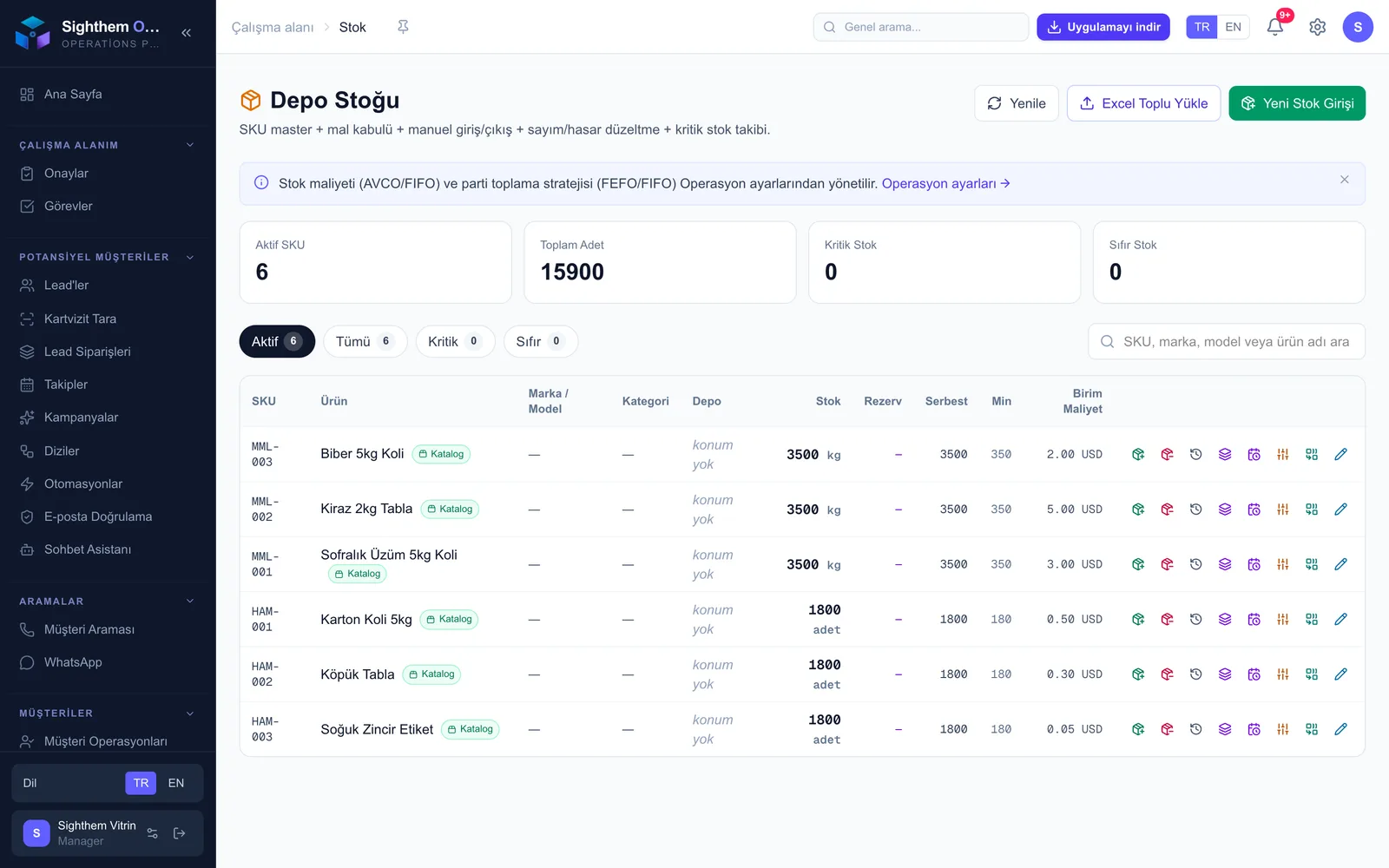
Lot, shelf life and FEFO: stock management that races the clock
For a product with a few days of shelf life, first in first out is not enough; what expires first must leave first. Sighthem's inventory core is built around lots and expiry dates.
- Record every goods receipt with lot and expiry date; the FEFO rule automatically pushes the shortest-life lot to the front at picking
- Scan GS1 barcodes to record which lot went on which shipment, and trace a lot backwards within minutes in a recall or buyer complaint
- Reserve the lot for a confirmed order with order-based stock reservation, so the system blocks promising the same produce to two buyers
- Track the packing facility, cold store and port warehouse separately with the multi-warehouse model, run transfers between them in the system, and import your current stock list from Excel
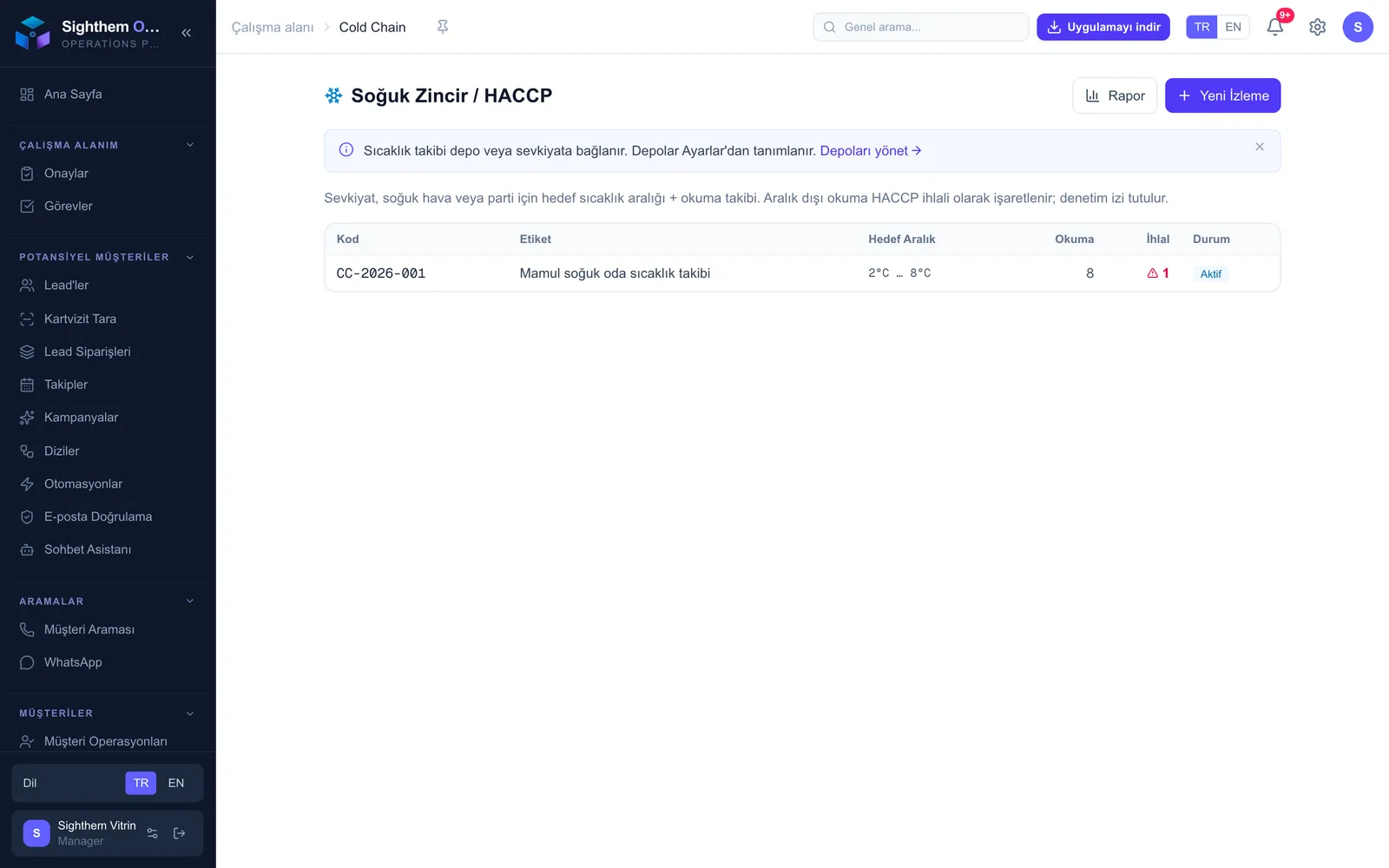
Cold chain and quality: temperature records, violation reports, QC certificates
For buyers and auditors, the cold chain only counts when it is recorded. Sighthem keeps temperature records tied to products and shipments, and reports violations as an auditable trail.
- Log temperature readings from storage and dispatch into the system; out-of-threshold readings are flagged as violations and appear on the audit report
- Pull a cold chain violation report aligned with your HACCP audit trail in one click, instead of digging through folders during a buyer audit or official inspection
- Assess produce arriving from the field or a supplier with incoming-goods QC at receipt, issuing a certificate of conformity or a non-conformity report in the system
- Define packing and processing steps with work orders and recipes (BOM); the production approval flow keeps on record which batch left under whose approval
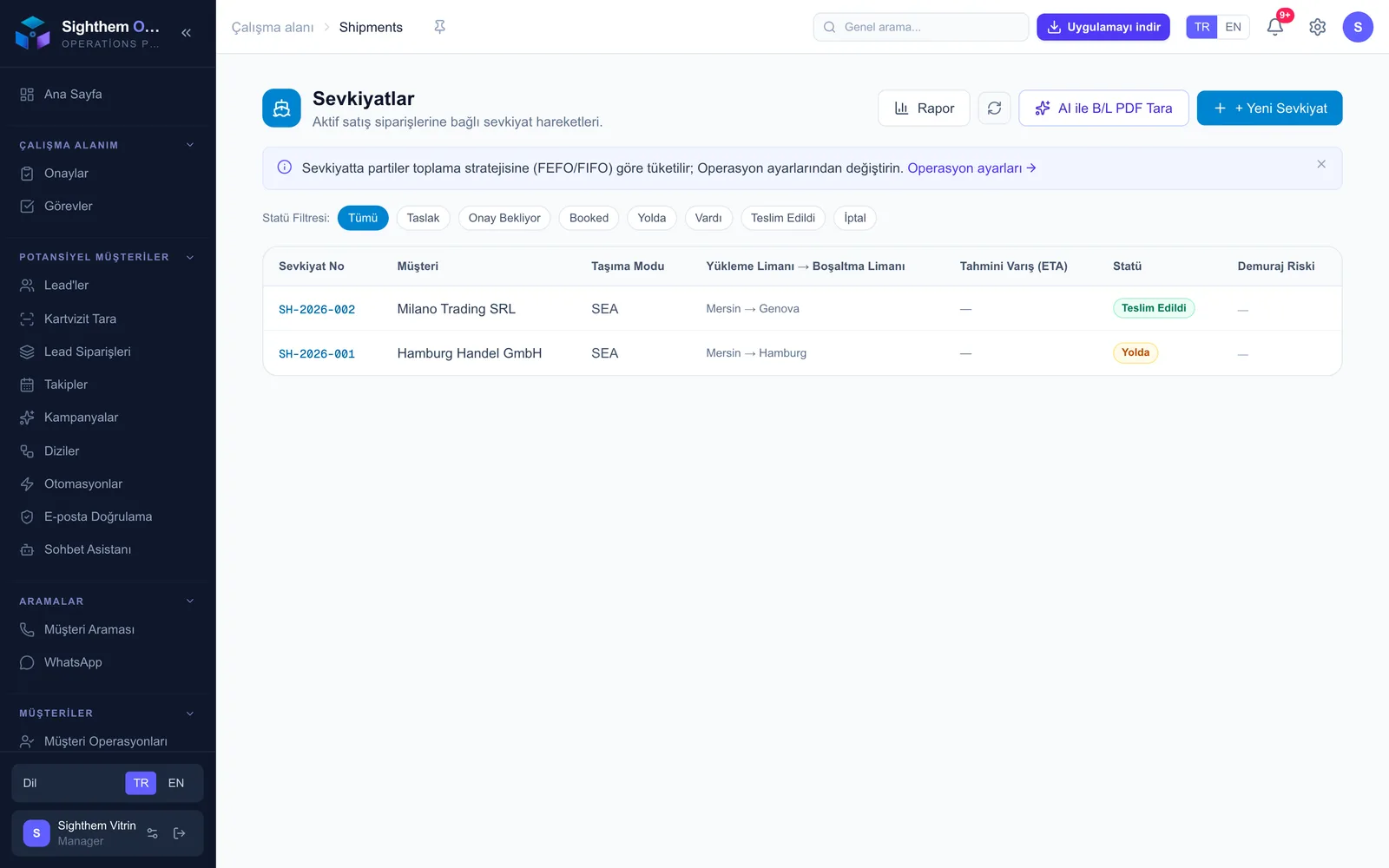
Shipment, packing lists, demurrage and customs: a dispatch cycle that runs by the hour
With fresh produce, a late truck costs you the goods and a waiting container turns into demurrage. Sighthem's shipment module works at pallet and carton level, tying forwarder and customs steps into the same chain.
- Bind pallets and cartons to the shipment; the packing list is generated automatically from pallet contents, removing hand-typed lists and weighing errors
- Manage partial shipments from a single order; when the first truck leaves, the remaining quantity stays visible on the order line by line
- Track forwarders and containers to see where each load is, spotting a waiting container early and catching demurrage risk before it grows
- Keep the GTIP code on the product card and link the customs declaration to the shipment; run the VAT refund file and DIIB input-offset-commitment tracking from the same transaction chain
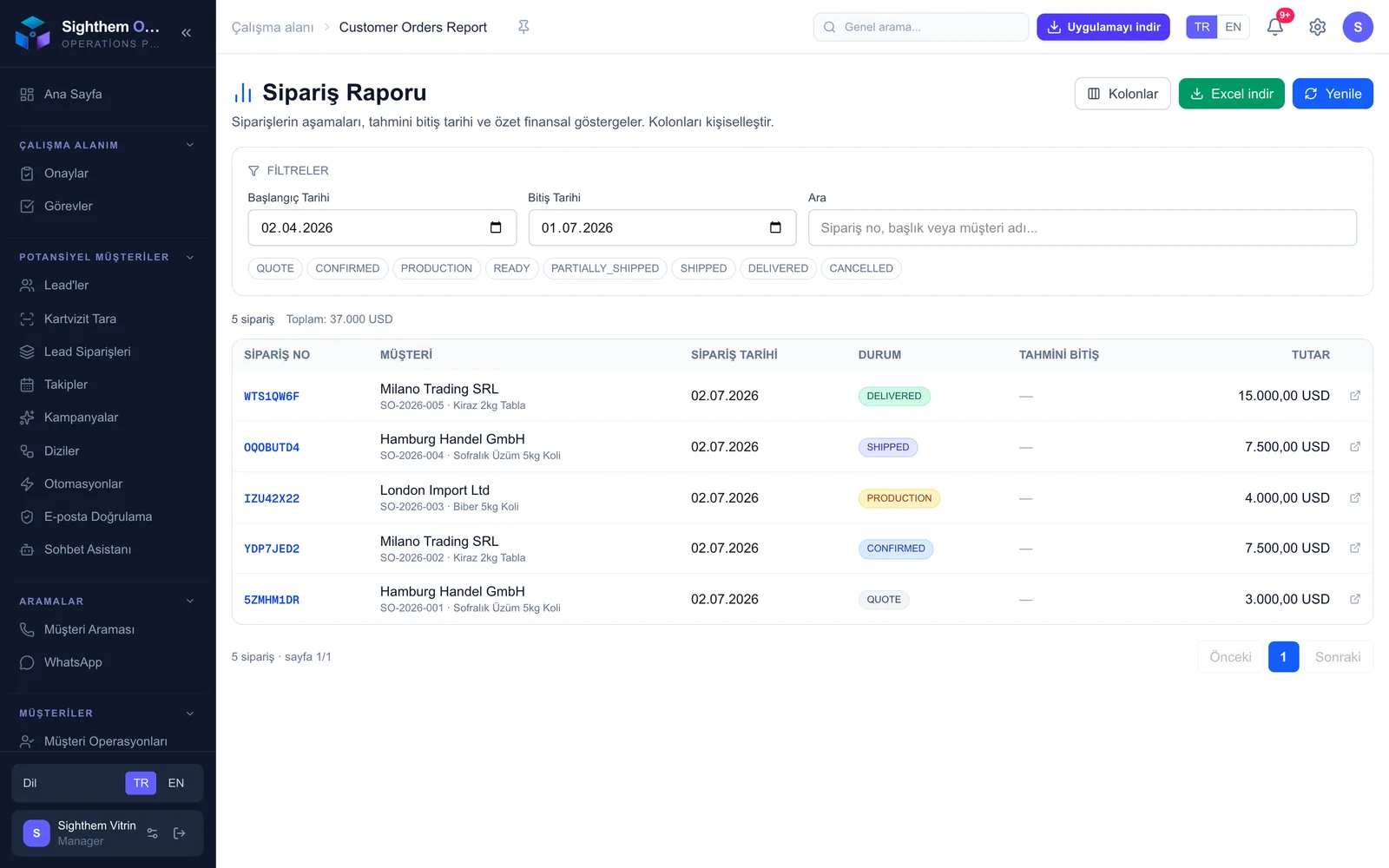
Documents, the COMMERCIAL INVOICE and reporting: the document set is ready before dispatch
In fresh produce, a late document means goods waiting at the port. Sighthem ties the document set to the shipment chain, produces the invoice and makes the whole operation reportable.
- Collect the document set (bill of lading, COMMERCIAL INVOICE, packing list, certificate of origin, insurance, certificates) in one list, and spot the missing document before the truck leaves the gate
- On L/C sales, get alerts on latest shipment and presentation dates; AI-assisted letter of credit reading highlights the critical clauses in the terms for you
- Produce the COMMERCIAL INVOICE for exports and a GIB-compliant UBL-TR e-invoice for domestic sales; the system works with your e-invoice integrator
- Narrow order, shipment, cold chain, incoming QC and DIIB reports with the column picker and download them to Excel; put critical steps behind the approval center and give the team role-based permissions
When you move onto the system, make defining shelf life and lot rules on product cards your first task. FEFO only works if expiry data is entered correctly at goods receipt; fill the lot and expiry fields with discipline on the receipt screen, and picking order falls into place by itself.
When orders, lots, temperature records and shipments live in the same chain, a buyer audit or recall becomes a single query: within minutes you can show which lot left in which container, with which temperature record. Hunting for records across folders and spreadsheets disappears.
Demurrage is usually born not while the container sits at the port, but while a document is missing. Teams that do not tie the document set and the declaration step to the dispatch plan burn their free days waiting for paperwork. Complete the document check on the shipment screen before the truck is loaded.
Frequently Asked Questions
How do FEFO and shelf-life tracking work in Sighthem for fresh produce exports?
Every goods receipt is recorded with lot and expiry date. At picking, the FEFO rule automatically brings the shortest-life lot to the front, and scanning GS1 barcodes records which lot went on which shipment. Order-based reservation sets the lot aside for a confirmed order, so the same produce cannot be promised to two buyers. In a recall, the lot is traced backwards within minutes.
What do the cold chain temperature records and violation report cover?
Temperature readings from storage and dispatch are kept in the system, tied to products and shipments; out-of-threshold readings are flagged as violations. You pull a violation report aligned with your HACCP audit trail in one click. Incoming-goods QC, certificates of conformity and non-conformity reports are part of the same quality chain, so you never dig for records during a buyer audit.
Prices change every day; how do I manage quotes and proformas at that speed?
Quote, proforma and order are a single flow in Sighthem. As prices move you revise the quote, and the revision history keeps a clear record of which version went to the buyer and which one was approved. You send daily price announcements as segmented bulk campaigns and see who is warm from opens and clicks. Negotiations over the official WhatsApp API stay on the customer card too.
At seasonal peak we open several orders a week for the same buyer; will they get tangled?
No. Each order is tracked with its own shipment and document chain, and with partial shipments the remaining quantity stays visible on the order line by line after the first truck leaves. Because pallets and cartons are bound to the shipment, the packing list is generated from each truck's actual contents. In reports you narrow order and shipment data with the column picker and download to Excel, closing the season with clean numbers.
What do you offer for demurrage and container tracking?
The shipment module includes forwarder and container tracking, so you see where each load is and spot a waiting container early. Since missing documents are the most common cause of demurrage, the document set is tied to the shipment chain: a missing document is visible before the truck leaves the gate. The customs declaration is linked to the shipment as well, so the customs step never falls outside the chain.
How do you handle the export invoice and domestic e-invoicing?
For export sales the COMMERCIAL INVOICE is produced; for domestic sales a GIB-compliant UBL-TR e-invoice is issued, and the system works with your e-invoice integrator. Because the packing list, certificate of origin and the rest of the document set sit on the same shipment chain, the invoice and the documents stay consistent with each other. The VAT refund file is fed from the same transaction chain.
Bring an export operation that races shelf life onto one platform. Try Sighthem free for 14 days on the PRO plan, no card required.
Start a 14-day PRO trial · Lot & shelf-life traceability · Logistics & shipping · Finding export customers · All industries · See pricing